I picked this book up at fopp merely because it was only £3 and i'd really enjoyed cloud atlas by the same author. I'm pleased i did as it's the best read i've had in ages. Written in a really dynamic first person present tense, the story flows rapidly, interspersed with fantasy, memories and dreams. As illustrated in cloud atlas, david mitchell seems to enjoy using a variaty of techniques and genres within one book, and again there are stories nested within this book. Set in Tokyo the story follows a country boy on his search to find his father who abandoned his mother before he was born. Now 20, his search brings him to the big city and an unfortunate encounter with the underworld, that may just reveal the secrets to his father's location. Can't recommend this book highly enough. The author spent a number of years out in japan teaching engliish, and he obviously draws richly from his experience out there. Though, i recently read a review of the book stating that it borrowed heavily on ideas from 'norwegian wood' by Haruki Murakami, so i shall have to read that and see.
Showing posts with label book review. Show all posts
Showing posts with label book review. Show all posts
Sunday, May 13, 2007
bank holiday v - number9dream
I picked this book up at fopp merely because it was only £3 and i'd really enjoyed cloud atlas by the same author. I'm pleased i did as it's the best read i've had in ages. Written in a really dynamic first person present tense, the story flows rapidly, interspersed with fantasy, memories and dreams. As illustrated in cloud atlas, david mitchell seems to enjoy using a variaty of techniques and genres within one book, and again there are stories nested within this book. Set in Tokyo the story follows a country boy on his search to find his father who abandoned his mother before he was born. Now 20, his search brings him to the big city and an unfortunate encounter with the underworld, that may just reveal the secrets to his father's location. Can't recommend this book highly enough. The author spent a number of years out in japan teaching engliish, and he obviously draws richly from his experience out there. Though, i recently read a review of the book stating that it borrowed heavily on ideas from 'norwegian wood' by Haruki Murakami, so i shall have to read that and see.

Sunday, April 29, 2007
in the country of men
 Picked this up on the cheap at tescos. Liked the front cover, shortlisted for the man booker, and the synopsis sounded good. Hooray, it was a good on the spot purchase as i enjoyed this story. It's set in post revolution libya, late 70s and is a story told from the perspective of a nine year old boy who's father is involved in anti-gadaffi propoganda. The story is thus interpreted from the snippets of conversation and scenes viewed by the nine year old. Which i like as it keeps you guessing as to what is actually happening, it's not an unreliable narrator, but some things take a while to make sense. In addition it is well written, though i wonder if some of the descriptions and metaphors are those of a nine year old, am i showing my writing prowess, or am i writing as a nine year old, that seems to be the dilemma of the author (hisham matar). The imagery is good and you feel like you are in arabic north africa. Being fairly short it didn't take long to read.
Wednesday, April 18, 2007
Books I've been reading
 The sailor who fell from grace with the sea by yukio mishima
Picked up this book at fopp for a bargain £1. Money well spent. I really enjoyed this translation of a japanese novel, it is written with such poetic language, and is nice and short. The story revolves around a widow and her young adolescent son. A son who, with friends, have formed a view on the futility of life as expressed by their parents (whether pre-teens actually sit around discussing Nietzche is another matter, but it is fiction). Along comes a sailor who seems to embody the carefree approach to life with no ties so longed after by this group of boys. However their illusion is dashed as he falls in love with the widow, leaving his nomadic lifestyle to 'settle down'. Angered by this action the boys have a macabre scheme to keep the image of the heroic sailor they wish to have.
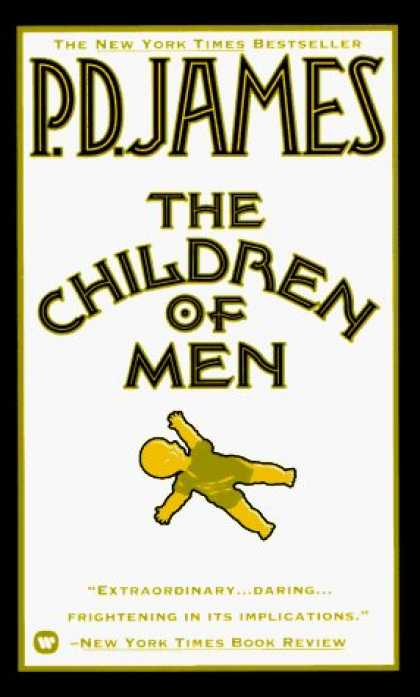 Children of Men - PD James
I got this after v told me about the film. I wanted to read it and check that it didn't cover ground that the book i'm writing covers. It doesn't. I was a little disappointed by this book, it's an interesting idea, the human race can no longer reproduce. In the novel it seems to be down to barren men and women, but the focus seems to be on defective sperm. To be honest the technology is around that obviates the need for sperm anyway, the most important thing is the ova. You can use some kind of cloning technique. Anyway, that is a flaw that is by the by. The novel is written part as the diary of the lead character and part as third person narrative. The diary entries I sometimes found too full of background setting information, the kind of things you really wouldn't put in a diary. The story continues and is punctuated with twists that are obvious a mile off, which added to my frustration of the read. It's an interesting story, but could've been told better, and I look forward to seeing the movie, which may well be better.
There'll be more later
Sunday, March 04, 2007
I said what about breakfast at tiffany's
 She said, I think I remember the film. And as I recall, I think we both kinda liked it. And I said, well that's the one thing we've got
Bought the collection of short stories by truman capote at fopp recently and enjoyed reading the original story and then re-watching the movie on dvd. Audrey hepburn's portrayal of Holly golightly is iconic, and being brought up on the a-team as a kid it's so strange to see george peppard as something other than Hannibal muttering, i love it when a plan comes together. Capote's book of short stories is interesting, BAT is by far the superior story, the others are much shorter, and though pleasant, aren't really striking. It's intersting to compare
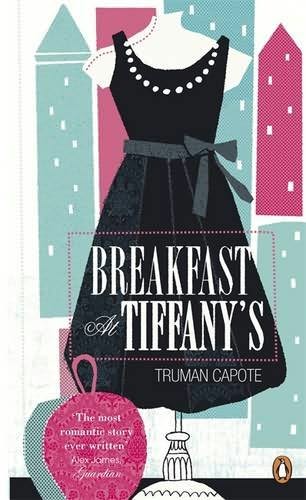 the differences with the film, the cliched happy ending of the film is not true to the novel, and although the character of Holly remains faithful to the book, I'm not so sure about Paul Varjak. The movie has him portrayed as some kind of gigalo, very heterosexual, and his relationship with holly has some kind of sexual chemistry. In the novel I'm not sure that that comes over quite so well, whether that is on purpose, or just a result of capote's writings being influenced by his own homosexuality, the relationship between holly and paul seems much more platonic. They are definately worth watching/reading.
Sunday, December 10, 2006
Arthur and George
 Picked up this book the other day because I liked the look of the cover and the synopsis on the back seemed intriguing. Started reading it last month and I have gone through periods of reading it a lot and then just the odd page here and there. Is it any good? Well, I'm not sure, it's interesting as it is based on historical figures and is a fictional account of something that actually happened. The imprisonment of George for a crime he did not commit and the subsequent campaign to clear his name led by Sir Arthur Conan Doyle. It starts well as we are introduced to the characters, but I found the court case of George rather tedious. I'm not a fan of courtroom literature, and as the result is obvious from the outset, it seems overlong. It then progresses from courtroom drama to who-done-it mystery and the interest levels are raised. Unfortunately there are then reams of pages given to the story of Arthur's love of another woman and all the complications that that brings. So in all I think this book is fairly average, and fails to engage and grapple with the institutional racism of the time and the pre-conceived opinion of 'half-caste' people. Still, it's well researched.
Sunday, October 22, 2006
The best made plans...
I had been pondering whether to go to see doncaster vs chesterfield, but decided that I could do with a weekend to get some more jobs done around the house. I took the advantage of having a lie in on saturday and do some reading. I've just bought why don't penguins feet freeze a compilation of questions from the new scientist's last word feature. It's quite an enjoyable read, though I think some of the answers could do with a few mathematical equations. Often it is much simpler to explain things with a formula rather than text. Got a bit of a sore throat, which i put down to breathing through my mouth at night. However as the day proceeded it was clear I had a cold and my nose just began streaming. It made me feel really grumpy and lethargic. Such that I couldn't get on with the jobs I had in mind. So frustrating to have a weekend taken away by a stupid cold. Had some soup and garlic bread and watched the final korean movie that I'd recorded. This was the most commercially successful I think, it is called brotherhood (of war) and is a fairly graphic portrayal of the korean war from the perspective of two brothers. It is in a similar vein as 'saving private ryan' and highlights the attrocities of war and the effect that war has on the soldiers. In places it is over sentimental, but the ending scene is really quite moving as the younger brother finally finds the resting place of his older brother.
Didn't sleep well due to the cold and this morning I found setting up church quite exhausting. Not many people at church this morning, which is really frustrating, some times i wonder why i bother. I think we have a really interesting way of 'being church' yet it feels somewhat isolated.
Didn't sleep well due to the cold and this morning I found setting up church quite exhausting. Not many people at church this morning, which is really frustrating, some times i wonder why i bother. I think we have a really interesting way of 'being church' yet it feels somewhat isolated.
Sunday, October 08, 2006
On Beauty
 Just finished reading Zadie Smith's latest novel. i've enjoyed her previous work, though found white teeth the most slow going, and wasn't too sure what all the fuss was about. This novel on the other hand, is the most easily read, but I don't think that means it is a great piece of work. The story is interesting, and there are certainly insights into love and relationships, what it is that makes a relationship work, and why sometimes it goes a bit wrong. There are plenty of debates between conservative and liberal thought, but no direct engagement with them, there are some aspects of being in a mixed racial relationship and being the children of such a relationship. There's even some stuff about Rembrandt. But to be honest as I neared the end of the book, it just seemed to be written with a hollywood audience in mind. A nice story, almost challenging, but not, so leaving the reader/audience still content with their own worldview. Enjoyable but not fantastic, 8 out of 10.
Thursday, September 14, 2006
alchemist
 Finished reading this book a couple of days ago. V recommended it to me a while back, and the title awoke a vague recollection, that someone else had also recommended it to me. I think it was HRK. When I was round at the minister's house I noted that he and his wife had a huge number of books and his wife had just finished reading 'on beauty' by zadie smith and she said she hadn't read 'autograph man'. When i was next up I took along my copy of 'autograph man' and I asked if they happened to have a copy of the alchemist, and they did. In fact they had a copy that had been read by madonna, or at least she had left comments on the cover. It's a short story and would probably be better read in one sitting, but I'm not on holiday, so that wasn't acheived. The writing style is very simplistic, overtly so in my opinion. It's a story about following dreams, becoming aware of creation around us and the creator speaking through that. It's a story of aligning yourself with your heart to find your desires. All wrapped up with biblical 'mythology' and mysticism. It's worth a read.
Sunday, August 13, 2006
Middlesex
 So i have finally finished reading this novel, and it has given me a good two weeks worth of enjoyment. I found it so much better than Eugenides debut novel, the virgin suicides, as it is certainly less 'american'. Sometimes I feel that I don't connect well to american literature, never getting into hemmingway, frustrated with the lead of 'catcher in the rye', continuing reluctantly with Kerouac, but this novel trancends the geographical confines and culture of the US. Here a story begins in the 1920s in greco-turkey, a story of love amogst the atrocities of war. The searching of the american dream and the penetration of a recessive genetic mutation leaving Cal born with non-specific gender. Raised as a girl, it is during her formative teenage years she realises that actually she is genetically a man, but with deficiency in one enzyme resulting in mal-formed gonads. Certainly an interesting subject matter, and told in a story that covers the subject matter with sincerity and not titilation. Of course anyone studying biology past gcse level will realise that there is more than a Y chromosome that makes one male, and studying developmental genetics shows how finally balanced the chemical soup of morphagen gradients, controlled by a comparitely small number of genes, is that ensures the organs grow correctly. The book also asks questions about identity, what makes us male or female, not new questions, but can be extrapolated to many other aspects of life, the ideologies we choose, the faith we have. Are all these tightly wrapped in the union of nature and nurture, what has the greatest pull? In this book it is obviously the male genetic make up that pulls Calliope to her male counter part Cal. But it also challenges the superstitious nature of faith, is Cal the punishment from God for an illicit incestrous relationship, or the elevated chance that recessive traits have of showing their prominance amongst closely related families from geographically secluded areas. Christ actually refuted the belief that disabilities were punishment from god, but this mindset still seems to prevail. Where does the boundary of superstition and spirituality lay, are prayers mere protective talismanic chants, or a communion with the divine? I think this book does really well to demonstrate the shades of grey through which life is lived, nothing is black and white, even something as straight forward as sex determination. Which is why I often sit on the fence over issues of faith, not because I want to shy away from saying faith is this or that, or christ means this or the other, but because I recognise God to be multi-coloured, multi-faceted, and to work in ways that i can't fully perceive. I think i like this book because it asks of us, who we are? which leads us to why we are? (for which 'life of pi' is a great book to read). And just sometimes we realise we are loved by god and we are to show that love.
Tuesday, August 01, 2006
Down and out

There hasn't been any reviews on here for quite some time so i shall try and re-address that over the coming days. A couple of book and cd reviews. Today I just finished reading 'down and out in paris and london' which is Geroge Orwell's thoughts and recollections of living with no money. From pawning clothes to buy food to survive, working 18 hours a day in a hotel, various squalid bed sits, to living the life of a tramp in london. It's not a bad read, and is quite an eye opener to the abject poverty experienced by many in this country merely 70 years ago. The novel concludes with some interesting thoughts, ideas to give hope and work to the 'tramps' and thoughts on class, which I guess are the seeds for his most well known novels, 1984 and Animal Farm.
In this book he is incredibly critical of the hospitality offered by the churches, despite the fact these would offer free food and drink, it always seemed to come with a forced prayer or a sermon. The tramps seemed to despise this charity, perhaps because they were starving they needed food and found it embarassing to have to take it from someone with excess, or perhaps it was felt that this charity was done out of some christian duty, rather than with any thought for the person. But it makes you think, people don't like to receive charity, they want dignity and the ability to leave a life of poverty. Which I guess is why things like fairly traded goods are a good way of engaging people to break the chains of poverty.
Subscribe to:
Posts (Atom)